
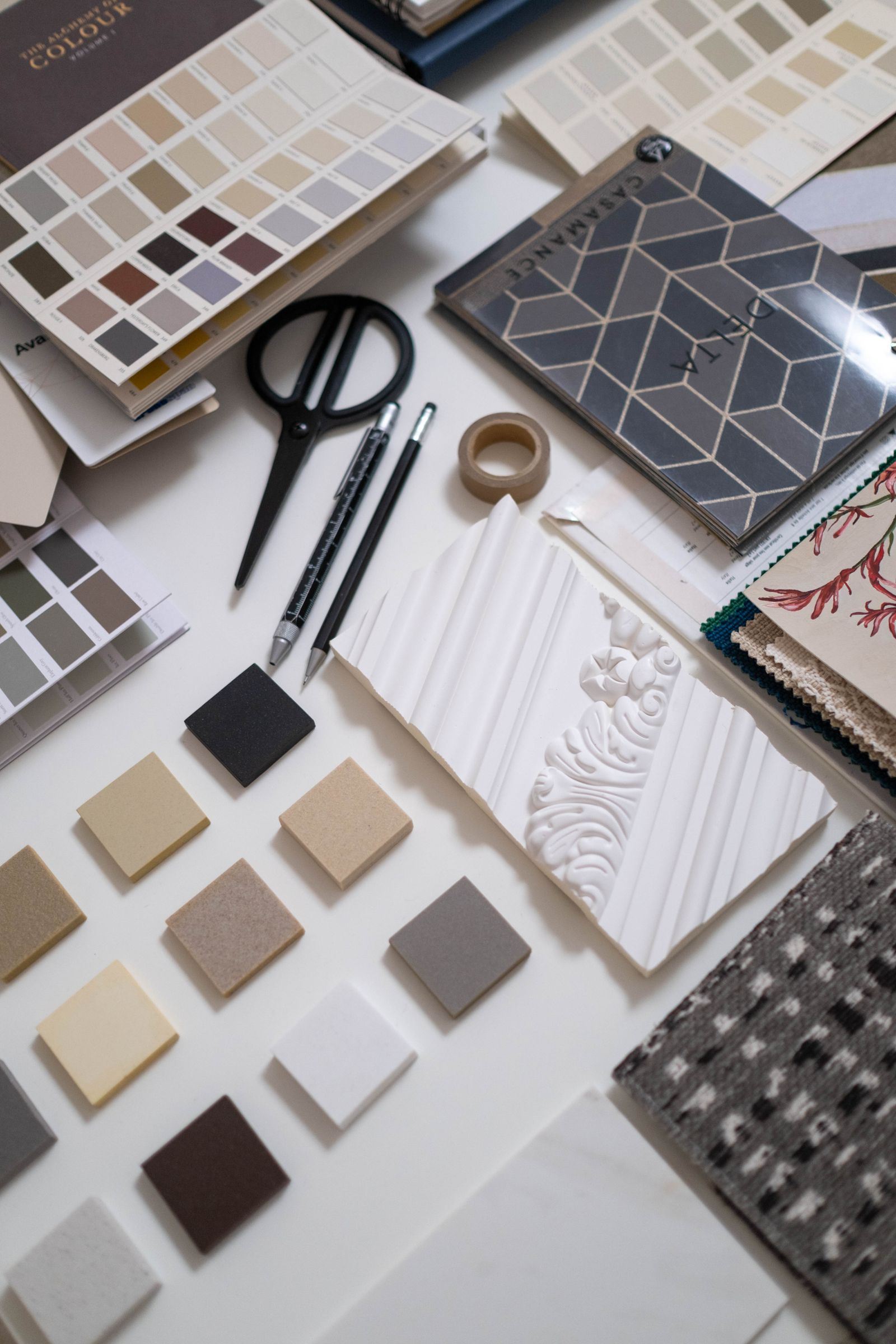
A decorative paint sample board lets you review a finish before approving work across a larger surface. It should demonstrate the proposed colour, texture and application direction while recording the products and method used. A sample becomes more useful when the process can be explained and repeated.
Begin with a supervised exercise or follow the selected product’s current instructions. The sample background should be appropriate for the system; not every paint or decorative material is suitable for every board.
Write a sample brief
Identify the room, intended surface and visual effect. Record whether you are exploring a direction or seeking approval for a specific product system. These are different stages: an exploratory sample may change, while an approval sample needs a clear reference.
Keep the first exercise manageable. Compare two controlled variations rather than trying several unrelated effects on one small board.
Prepare the background
Select a suitable sample substrate and identify the required preparation. Check whether it reasonably represents the intended wall. A finish applied to one type of board may not behave identically on a different background.
Label the board before working and protect the surrounding area. Use the protective equipment, ventilation and handling controls required by the products and trainer. Do not improvise mixtures or substitute materials because they appear similar.
Change one variable at a time
For example, keep the same product system and compare two colours, or keep the colour and compare two approved application approaches. Record what changed. If preparation, dilution, tool, colour and method all vary, you will struggle to understand the reason for the different result.
Follow the actual application and drying instructions. A finish that looks interesting while wet may appear different after it reaches the specified review stage.
Keep this sample record
| Field | What to enter |
|---|---|
| Sample reference | Unique code and date |
| Background and preparation | Substrate and relevant preparation products |
| Coating system | Brand, product, colour and finish references |
| Application | Tools, method and stages followed |
| Review conditions | Lighting, viewing location and readiness |
| Decision | Revise, retain for exploration or approve |
Review in the intended room
Place the sample beside retained materials and view it under relevant lighting. Consider how the texture might appear over a much larger area. Discuss acceptable variation where the finish involves hand application.
A small board cannot demonstrate every junction, corner or large-surface effect. If those details matter, agree whether a larger sample area or additional mock-up is needed before proceeding.
Record approval and retain the reference
Keep the selected sample, its record and any agreed limitations together. Note who approved it and when. If the product or application changes later, arrange a fresh review rather than describing the new result as automatically equivalent.
Do not present a training panel as completed client work. Photograph your own sample with permission and explain the task, process and feedback if you include it in a portfolio.
Read the interior paint finishes guide and beginner portfolio guide to connect the sample with a clearer learning presentation.
Practise with Ujenzi College
Explore Painting and Decorative Finishes for the current course scope, tuition and preparation requirements. Ask admissions about the next class.