
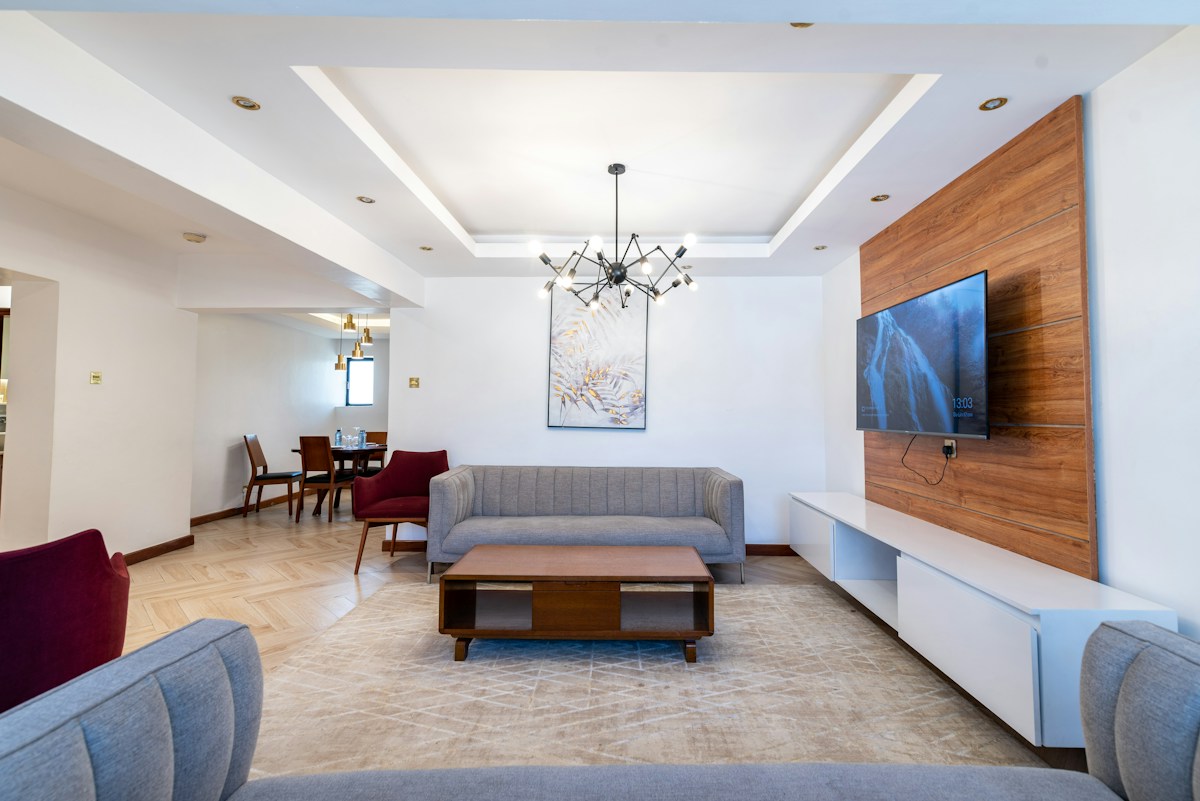
Interior design and interior decoration overlap, but the task you want to solve helps explain the difference. Interior design considers how a space functions and how its parts work together. Decoration focuses more closely on its visual character through choices such as colour, textiles and movable items. Actual professional responsibilities depend on training, project scope and the expertise required.
For a beginner, this distinction is most useful as a way to choose an exercise. Start by describing the problem in the room instead of deciding which title sounds more impressive.
Compare two requests for the same living room
Request one: “We need a comfortable study position without blocking the cupboard.” That requires observing routines, measuring furniture and testing the layout. A new cushion or paint colour will not resolve an access problem on its own.
Request two: “The layout works, but the curtains and upholstery do not feel coordinated.” This directs attention to a visual scheme, material samples and purchasing choices. You still need to check dimensions and budget, but the starting problem is different.
Use this task comparison
| Room question | What to investigate |
|---|---|
| Can everyone use the space? | Activities, furniture footprint, movement and individual needs |
| Do the finishes work together? | Colour, texture, light, existing materials and samples |
| Can the proposal be delivered? | Product availability, budget, installation and specialist input |
| Is permanent work proposed? | Permissions, technical design and appropriate professional responsibilities |
A room proposal can involve all of these questions. Do not assume that attractive styling resolves technical or access requirements, or that a measured layout automatically produces a coherent visual direction.
Try a two-part beginner exercise
Choose a room you have permission to study. First, write a functional brief: who uses it, which activities matter and what currently gets in the way. Record the fixed features and furniture that must remain. Sketch two possible arrangements and explain their trade-offs.
Second, create a small material direction that respects the existing room. Select a wall-colour reference, a textile and one supporting material. Explain how these choices support the brief. Keep inspiration imagery separate from actual products you intend to purchase.
Check what your work demonstrates
- Can another person understand the problem from your brief?
- Have you checked furniture sizes rather than judging by photographs?
- Does the visual scheme relate to the actual room?
- Have you identified decisions requiring professional input?
- Are product costs and availability confirmed or clearly marked as assumptions?
Label the result as a learning project. A concept exercise is a useful beginning, but it is not evidence that you can independently take responsibility for every technical element of an interior.
Choose the next learning step
If both the layout and the visual direction interest you, begin with a structured room proposal. If you mainly want digital communication, identify which drawing and modelling tasks you need to learn. If practical installation interests you more, compare the relevant finishing courses.
Use the client brief template to define your starting task, then review the short-course and diploma comparison when deciding how broadly you need to study.
Practise with Ujenzi College
Explore Interior Design Essentials for the current course scope, tuition and preparation requirements. Ask admissions about the next class.