
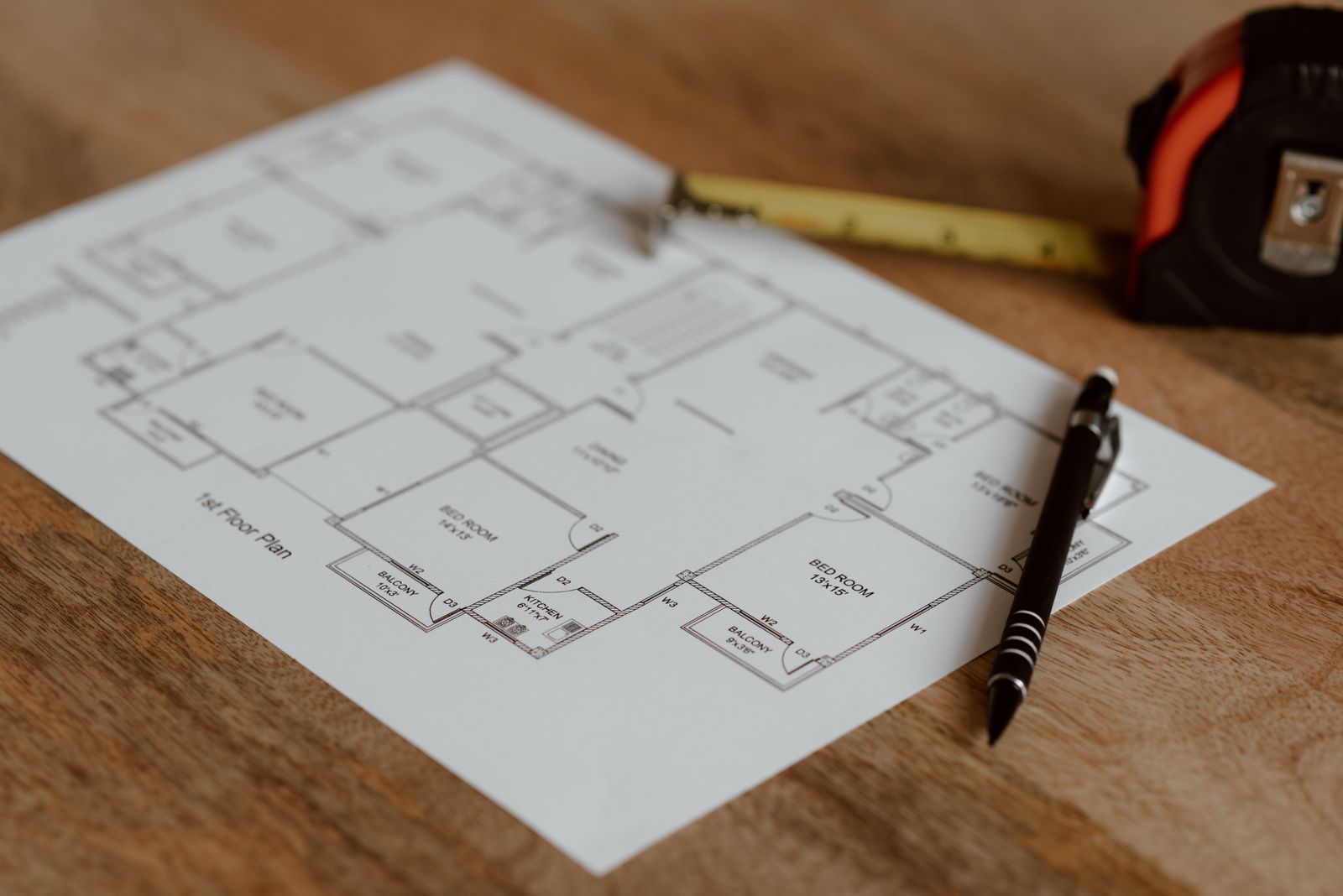
An interior fit-out budget translates the agreed scope into a cost plan. A useful template shows what is included, how quantities were calculated and which amounts are confirmed. It should also help you track spending as decisions and work progress.
The example below uses invented training figures. It is not a current market-price guide or a quotation for a real project.
Link each cost to the scope
Begin with defined work packages rather than a total you hope to achieve. Identify materials, labour, delivery, protection, access and other costs where relevant. Record what the client supplies and what the contractor supplies so items are not omitted or counted twice.
Keep assumptions visible. A supplier quote, a planning allowance and a client target are different kinds of information. Give each amount a source and review date.
Use a basic budget schedule
| Field | Purpose |
|---|---|
| Item and scope reference | Connect the cost with defined work |
| Quantity and unit | Show the measurement basis |
| Rate or task price | Record the current quotation or assumption |
| Budget amount | Calculate quantity × rate where appropriate |
| Source and status | Confirmed, allowance or awaiting information |
| Commitment and actual cost | Track orders and recorded spending |
Work through an illustrative total
Assume a small, defined room exercise with KES 18,000 for materials, KES 12,000 for labour, KES 2,000 for delivery and KES 1,000 for protection. The base subtotal is KES 33,000.
If an illustrative contingency of 10% is agreed for the exercise, it is KES 3,300, giving a planning total of KES 36,300 before any applicable tax. State the tax treatment separately and make clear which amounts already include it to prevent double counting.
These figures illustrate the structure and arithmetic only. A contingency is not a substitute for investigating missing scope, and it is not automatically available for any requested extra.
Track commitments as well as payments
An approved order can commit money before an invoice is paid. Keep the order value, invoiced amount and paid amount as separate fields. Do not add all three together as though they were separate costs.
Compare the forecast final cost with the approved budget. If the forecast rises, identify the affected item and reason while there is still time to review choices.
Record changes in a separate log
Give each change a reference, description, price effect, programme effect and approval status. Update the budget only on the agreed basis. Retain the earlier version so the movement can be explained.
For example, a client may request a different finish after the original sample was approved. Record the substitution and its cost implications, rather than silently replacing the old figure and losing the decision history.
Review before presenting the budget
Check arithmetic, units, quotation validity, stock and delivery assumptions. Read the budget beside the scope and identify anything included in one document but missing from the other. Clearly label unresolved costs and exclusions.
Continue with the fit-out planning guide and painting quotation example. Use a budget to support decisions throughout the exercise, not only as a total produced at the beginning.
Practise with Ujenzi College
Explore Interior Fit-Out and Project Management for the current course scope, tuition and preparation requirements. Ask admissions about the next class.