
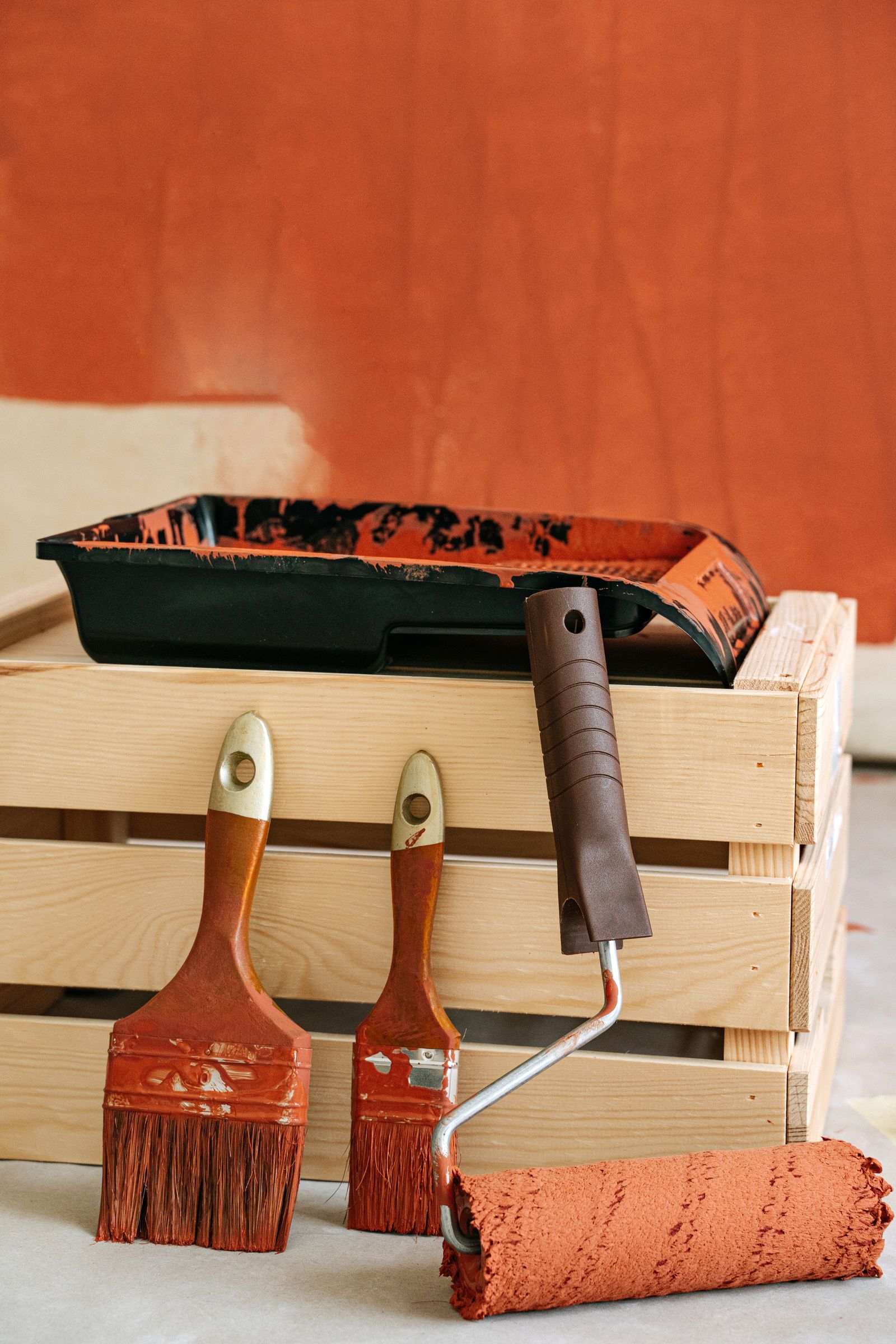
A paint quantity calculation combines the area to be coated, the number of coats and the selected product’s coverage. It helps you prepare an estimate, but it is not a guarantee of consumption on every wall. Surface condition, application and the actual coating system affect the result.
Use this worksheet for practice, then confirm the selected product and site conditions before buying paint. Calculate primer, preparation products and different finishes separately.
Measure the surfaces consistently
For a simple rectangular room, add the wall lengths to obtain the perimeter and multiply by wall height. Record openings and the agreed deduction method. Measure recesses and additional surfaces separately instead of hiding them in a rough allowance.
Keep the ceiling separate from walls if a different product or coating system is proposed. Doors, frames and other items also need their own specification and measurement basis.
Use the basic formula
Estimated litres = paintable area × number of coats ÷ coverage per litre per coat.
If an allowance is justified, apply it clearly after the base calculation and record the reason. The coverage figure should come from the actual product guidance, interpreted for the surface and work. Do not use one convenient number for every paint.
Work through an illustrative room
Assume a room 4 m long and 3 m wide with a wall height of 2.7 m. The perimeter is 14 m and gross wall area is 37.8 m². For this exercise, assumed opening deductions of 5.8 m² produce a net wall area of 32 m².
Assume two topcoats and planning coverage of 10 m² per litre per coat. The base quantity is 32 × 2 ÷ 10 = 6.4 litres. An illustrative 10% allowance gives 7.04 litres. If the selected product is supplied in suitable 4-litre packs, two packs provide eight litres.
These are arithmetic assumptions, not a product specification or a recommendation to apply two coats to every surface. Confirm the complete coating system and available pack sizes.
Complete your quantity worksheet
| Field | Your record |
|---|---|
| Room and surface | Identify walls, ceiling or other item |
| Measured area | Show dimensions and deductions |
| Product and finish | Record exact reference |
| Coats and coverage | Record manufacturer basis |
| Base litres | Show the calculation |
| Allowance | State amount and reason |
| Purchase quantity | Review available pack sizes and stock |
Check assumptions before ordering
Crown’s Silk Vinyl information explains that spreading capacity depends on factors including texture, porosity and application conditions. Use current product information and discuss uncertainty with the supplier or responsible professional.
Significant colour changes, uneven backgrounds and unresolved surface problems can affect the work. Investigate preparation first rather than assuming extra topcoat will solve every issue.
Connect quantity to cost
Request dated prices for the actual product, colour and packs. Add preparation, labour, protection and delivery separately where applicable. Avoid comparing a paint-only total with an inclusive painting quotation.
Use the painting quotation guide to build the cost document, and the wall preparation guide to check what must happen before the decorative coats.
Practise with Ujenzi College
Explore Painting and Decorative Finishes for the current course scope, tuition and preparation requirements. Ask admissions about the next class.