
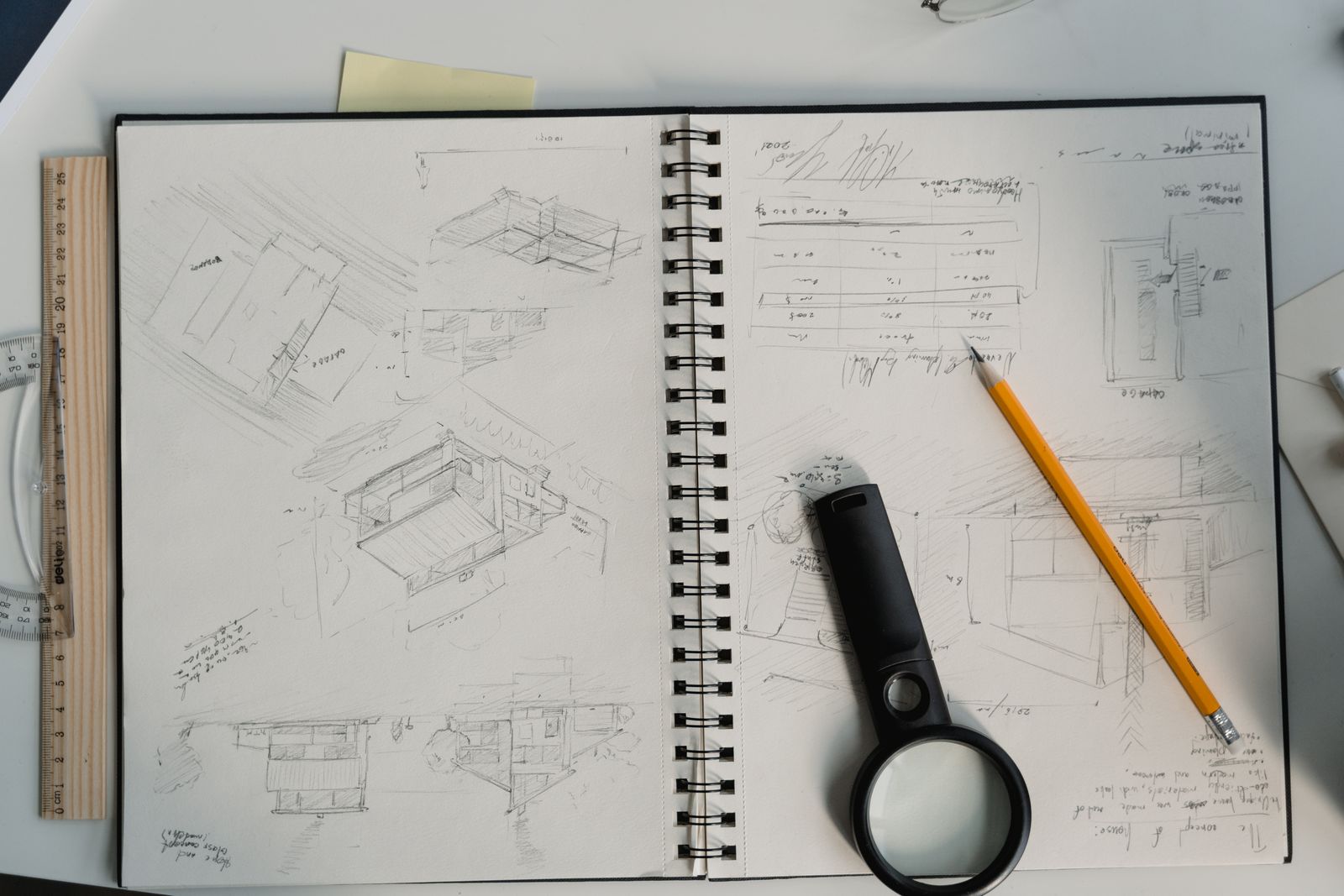
Your first interior design portfolio can use course projects if you label them accurately and show your own contribution. You do not need to imply that a classroom proposal was a paid client commission. A well-explained learning project can demonstrate observation, decisions, practical work and improvement.
The purpose of a beginner portfolio is to help someone understand how you approach a task. Strong organisation and honest explanations matter more than a large number of pages.
Select projects that show different skills
Start with a small number of your strongest completed exercises. One room proposal might show a measured layout and material direction. A finishing exercise could show surface preparation and sample quality. A fit-out pack could show scope, budgeting and sequencing.
Choose work that you can explain confidently. If a project involved a group, identify the specific part you completed. If the trainer supplied the brief or base drawing, say so. This makes your contribution easier to assess.
Use a consistent project structure
- Project label: identify it as a course exercise, independent concept or real commission, as applicable.
- Brief: describe the user, room, task and constraints.
- Evidence: show measurements, observations, material tests or early alternatives.
- Decisions: explain why you selected the preferred solution.
- Outcome: present the final drawing, sample or document clearly.
- Reflection: note feedback, revisions and what you would improve.
A reader should be able to follow the project without hearing a spoken explanation. Use short captions beside the relevant image instead of a long introduction on a separate page.
Show process without overwhelming the reader
One early layout and its improved version can communicate a lot. Perhaps the first plan blocked storage and the second restored access. Highlight the change and explain the reason. This is more informative than including ten nearly identical drawings.
For painting or gypsum exercises, photograph stages before they are covered. Keep views well lit and in focus, and use close-ups for the details you are discussing. Identify a practice panel as a practice panel; do not describe it as a completed building installation.
Keep drawings and visuals legible
Give each page a clear title and a manageable amount of content. Label plans with units and scale information where appropriate. Check that text remains readable when the portfolio is viewed on a phone or a typical laptop screen.
Use renders to communicate the concept, but include measured information where your claim depends on dimensions. Label AI-assisted imagery and distinguish it from a verified drawing. A dramatic image should not suggest that untested products or details have been specified.
Respect ownership and permission
Use your own work and obtain permission before publishing client spaces or photographs identifying other people. Credit reference imagery and supplied material where required. Do not remove another designer’s name or present downloaded drawings as your own.
Keep a private working folder containing original files, source links and dated drafts. It helps you answer questions and update the portfolio without recreating your project history.
Finish with useful contact information
Add your name, contact details and a concise statement of your current skills. Avoid claiming expertise beyond the work shown. Check every page for spelling, file quality and consistency, then ask someone unfamiliar with the project to review it.
Ujenzi’s practical short courses produce defined exercises that learners can document as learning work. A course output is a starting point; further practice and careful revision strengthen the portfolio. Enquire about a course aligned with the skills you want to develop.