
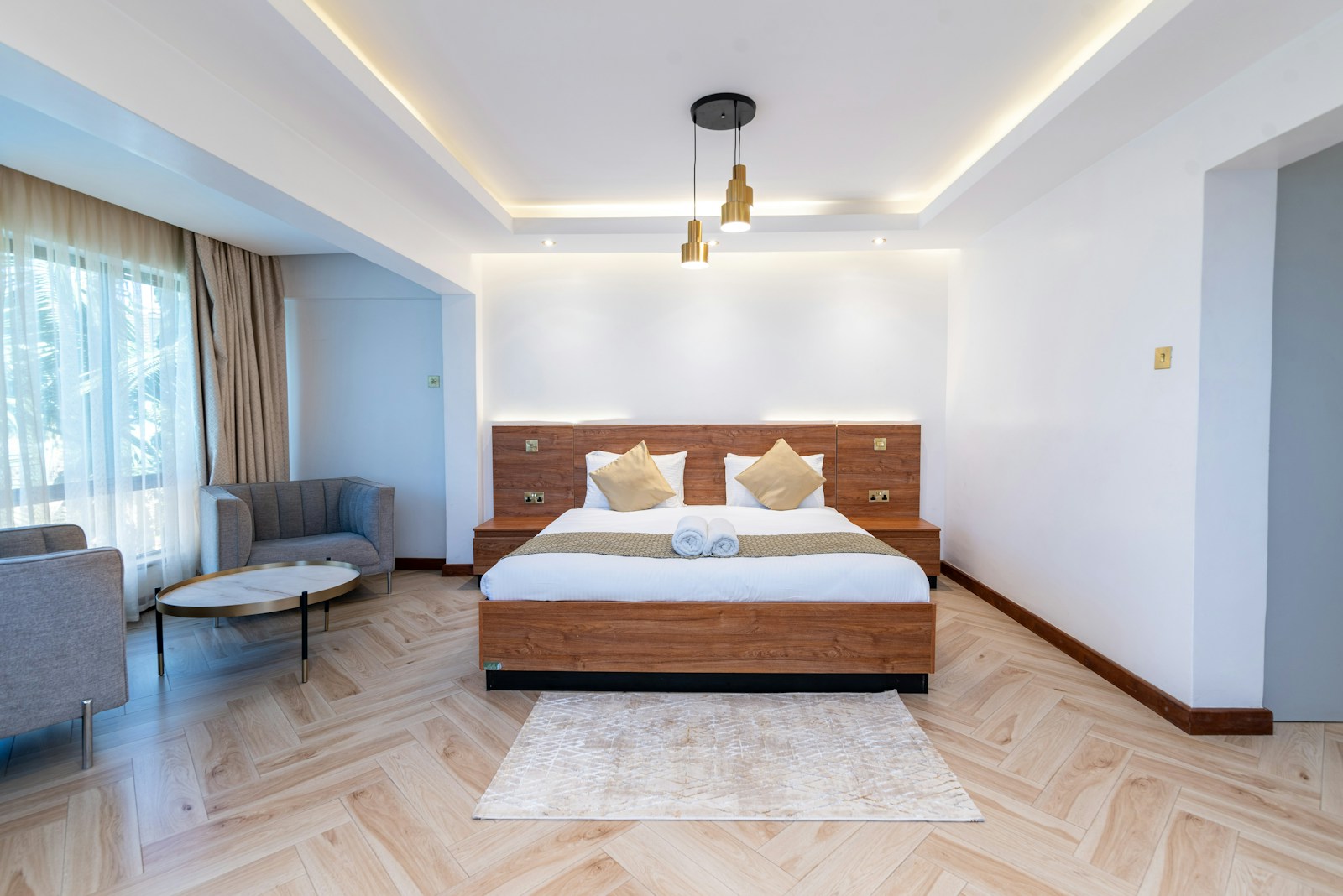
Interior lighting planning starts with the activities in a room and the conditions people experience there. A beginner can observe daylight, identify tasks and describe the intended atmosphere before selecting decorative fittings. The output is a concept brief for discussion, not an electrical installation design.
Use one room for this exercise. Keep the existing layout and user needs visible so lighting is considered as part of the space rather than a collection of attractive products.
Record the current conditions
Observe the room at useful times, with permission. Note which areas receive daylight, where reflections become distracting and which activities feel poorly supported after dark. Record existing fittings and visible controls without opening or testing electrical equipment.
Ask the people using the room what they find uncomfortable. A television reflection, a shadow over a work surface and difficulty finding a switch are different problems and may need different responses.
Describe three useful lighting roles
General or ambient lighting supports the overall room. Task lighting supports an activity such as reading or preparing food. Accent lighting draws attention to a selected feature. These are planning roles; a fitting may contribute to more than one role depending on the arrangement.
Do not assume that a brighter lamp automatically resolves the problem. Position, glare, contrast and the relationship with other light sources also matter.
Make an activity-based concept schedule
| Activity or area | Observed issue | Concept to discuss |
|---|---|---|
| Reading chair | Page falls in shadow | Task-light position and user control |
| Study desk | Reflection on the screen | Layout, daylight and light-source position |
| General circulation | Uneven visibility after dark | Overall arrangement and accessible controls |
| Display shelf | Feature is visually lost | Whether an accent light is necessary |
These are example discussion points, not product prescriptions. The appropriate solution depends on the room, users and technical assessment.
Review the visual effect with materials
Lighting affects how colours and textures appear. Compare the intended paint, fabric and timber samples under the conditions relevant to the room. Ask suppliers for product information and demonstrations where useful.
Colour temperature describes a light source’s warm or cool appearance, while colour rendering concerns how object colours appear under it. These are different characteristics. Avoid selecting a light solely from a marketing photograph or one descriptive label.
Prepare questions for the appropriate specialist
- Which light levels and performance requirements apply to the activities?
- How will glare and reflections be reviewed?
- Are the proposed fittings suitable for their locations?
- What controls, compatibility checks and installation work are required?
- Which permissions, testing and approvals are needed?
Do not alter wiring, specify circuit arrangements or install fittings from a concept sketch. Electrical work and specialist design require appropriate competence and project-specific assessment.
Present the concept clearly
Mark the activities and intended lighting roles on a copy of the room plan. Add reference images and a list of unresolved technical questions. Label it “lighting concept for review” so it cannot be confused with installation instructions.
Use the room measurement worksheet and space-planning guide to establish the room information. Treat lighting as one part of a coordinated proposal, reviewed with the people qualified to develop it.
Practise with Ujenzi College
Explore Interior Design Essentials for the current course scope, tuition and preparation requirements. Ask admissions about the next class.