
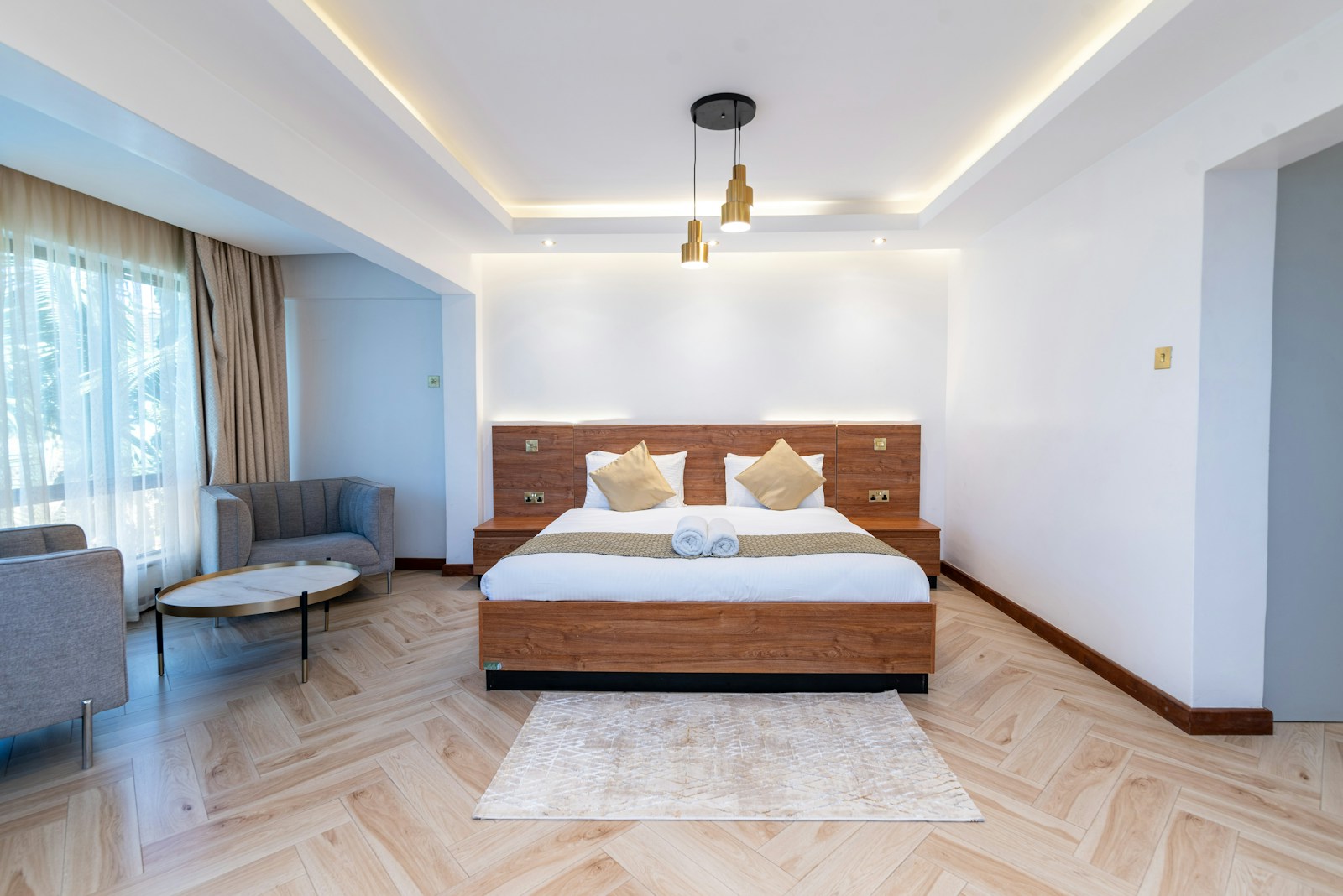
Choosing colours and materials for a small Nairobi apartment starts with the room you have: its daylight, floor finish, existing furniture and everyday use. A coordinated scheme can make the space feel more settled, but it also needs to be affordable, maintainable and practical.
Before buying paint or fabric, photograph the room, measure key furniture and list the finishes that will remain. If you rent, confirm what changes the landlord permits and whether you must restore them when you leave.
Read the light before choosing a colour
Observe the room at different times. A colour that feels warm beside a bright window may look muted deeper inside the apartment. Existing lamps also affect the way you see paint, fabrics and timber.
Test a sample in more than one position and view it after dark. Phone screens and paint-chart photographs are useful for narrowing options, but they cannot show exactly how the finished wall will appear in your room.

Choose a base that works with fixed finishes
Look at the floor, kitchen cabinetry, built-in wardrobes and other elements you are unlikely to change. Identify whether their colours and undertones work together. Your wall colour and main textiles should help connect these features.
Small spaces do not require every surface to be white. A pale base can be useful, but a deeper colour can also work when it supports the lighting and layout. Avoid choosing a colour only because a large, professionally photographed room used it successfully.
Use a short material palette
Too many unrelated finishes can make a compact apartment feel busy. Start with the main existing material, then choose a limited group of complementary textures. For example, a tiled floor, one timber tone and a consistent curtain fabric may provide enough variation.
- Upholstery: check cleaning instructions and suitability for the household.
- Curtains: consider privacy, daylight control, fitting and cleaning.
- Wall paint: choose a product suitable for the surface and cleaning needs.
- Furniture finishes: compare actual samples and edge details.
- Accessories: use them to reinforce the direction after major decisions are resolved.
Do not assume that “washable” or “water resistant” means suitable for every wet or heavily used location. Read the product’s stated applications and care requirements.
Let function guide the visual choices
A beautiful fabric may be inconvenient where food is regularly served. A highly reflective surface may create distracting glare opposite a window. Material selection should consider how the room will be used and maintained, not only how it looks in a sample book.
For a multipurpose living room, you might choose a consistent wall colour, practical curtains and a durable work surface, then introduce character through a small number of movable pieces. This can be easier to maintain than multiple decorative treatments on every surface.
Price the whole decision
Compare total installed costs, including preparation, transport, accessories and labour where applicable. A curtain price without its track and installation is incomplete. A paint budget without surface preparation can also be misleading.
Request dated quotations and check stock before final approval. If you explore suppliers through Interiors Kenya, verify product details and prices directly with the supplier.
Try a room proposal before spending
Put your layout, material samples and shopping list together. Check that the chosen furniture fits and that the scheme supports the room’s everyday activities. Make adjustments on paper before placing orders.
Ujenzi’s Interior Design Essentials offers a practical introduction to this process. Ask about the next class if you want feedback on a first room proposal.