
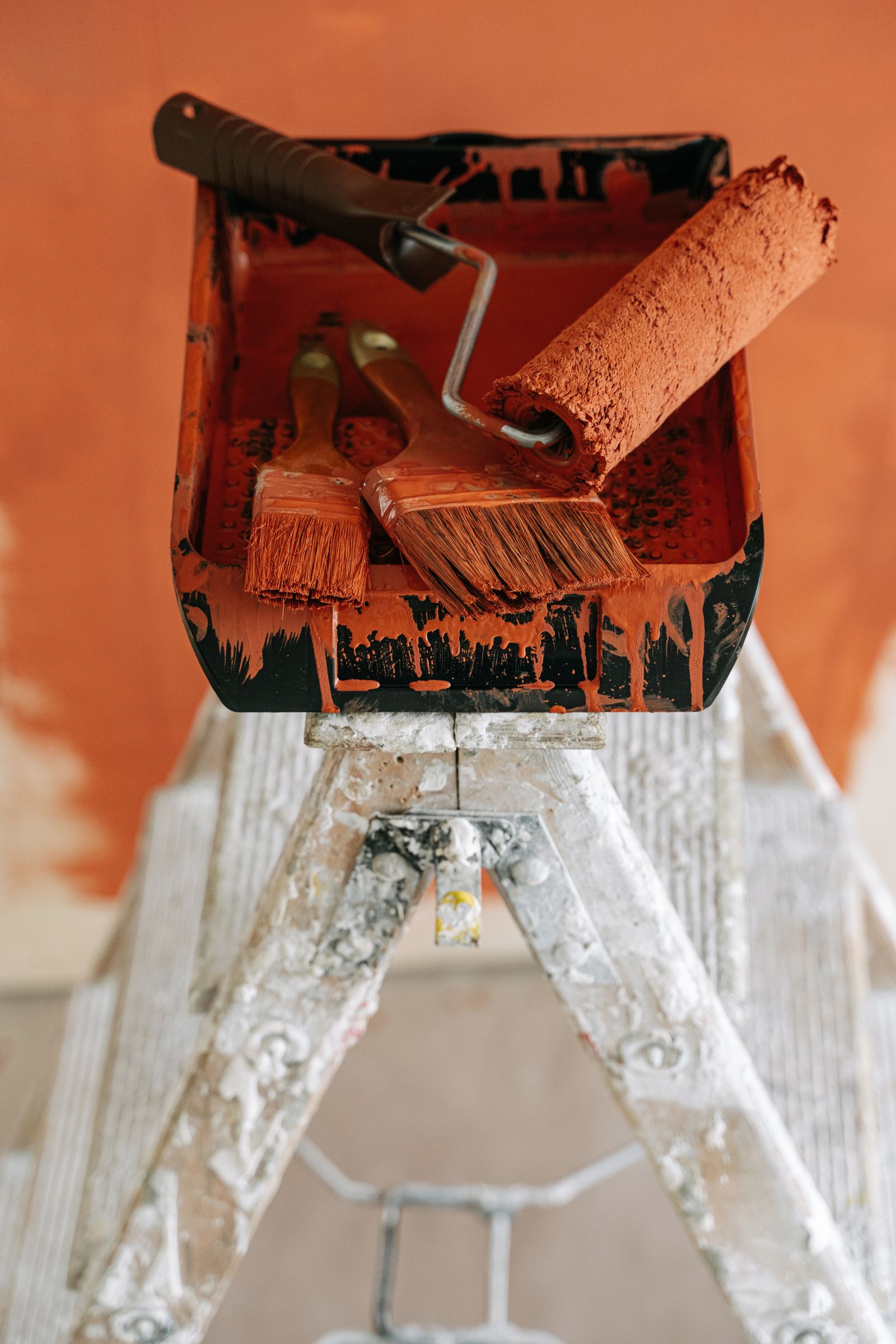
Wall preparation before painting gives the chosen coating a suitable surface and helps you identify problems that paint alone cannot solve. A fresh colour may temporarily disguise an uneven or unsound wall, but the underlying condition still affects the result.
The correct preparation depends on the substrate, its existing coating and the selected paint system. Use the current manufacturer instructions for the actual products rather than treating this guide as a universal specification.
Inspect before opening the paint
Look at the whole wall and then examine particular areas. Note loose paint, powdery surfaces, visible contamination, dents, cracks and moisture-related marks. Ask about previous coatings or repairs if that information is available.
Different symptoms require different decisions. A small stable surface dent is not the same as a recurring crack or active dampness. Do not fill or cover a condition whose cause needs investigation.

Protect the room and plan the work
Move or protect furniture and cover the surfaces that must remain clean. Agree access, ventilation and how people will use the room during the work. Keep tools and materials organised, with clear routes through the space.
Electrical fittings and work near services need appropriate precautions and competent help where necessary. Do not dismantle fittings or disturb unknown materials simply to make preparation easier.
Clean and deal with unsound material
Paint needs a suitable background. Follow the product guidance for removing contamination and dealing with loose or failing coatings. Surface treatment must be appropriate for the material beneath and for the coating you intend to apply.
Unknown old coatings and extensive contamination deserve assessment before sanding or scraping. Use the specified controls and protective equipment for the task. Dry dust should not be spread through an occupied room.
Repair suitable defects and review the surface
Use a filler compatible with the substrate and the intended paint system for defects that are suitable for that treatment. Follow its application and drying requirements. Review the repaired area before proceeding to the coating.
A useful training exercise is to compare the wall before and after preparation under consistent lighting. Note whether the transition is even and whether the surface is ready for the next specified stage. A photograph of the final colour cannot show all the decisions made beforehand.
Choose primer or sealer by the system
Primer and sealer decisions depend on the wall and product. New, previously coated, porous or powdery surfaces can need different treatment. Applying a generic “undercoat” to every wall is not a substitute for checking compatibility.
Crown’s Jewel Silk guidance, for example, sets out different preparation routes for sound emulsion, previously enamel-coated surfaces and boards. That is a reminder to identify the actual substrate before choosing the system.
Allow the specified drying and recoating periods
Check the instructions for fillers, preparation products and paint. Do not confuse a surface that feels dry with a surface ready for the next stage. Conditions on site and the product requirements affect the sequence.
Record what was used and when. This helps explain a problem later and supports a clearer handover.
Include preparation in the quotation
Describe the agreed preparation separately from the decorative finish. If inspection reveals additional work, agree the scope and cost before proceeding. This protects the clarity of both the work plan and the client’s expectations.
Ujenzi’s Painting and Decorative Finishes course includes surface preparation and sample-based practical work over three weeks. Enquire about the next class to confirm the timetable and material arrangements.